Financial watchdogs sitting in the European Parliament have cast serious doubt on the integrity of the EU’s Covid recovery fund — and threatened court action over its lack of transparency.
On Thursday (5 February), the vast majority of MEPs sitting in the European Parliament’s budget control committee warned against using a similar spending approach in the next EU’s long-term budget stretching 2028 to 2034.
Known officially as the Recovery and Resilience Facility (RRF), the fund was set up in response to deal with the economic fallout of the pandemic.
EU states have until August this year to complete so-called ‘milestones’ spanning everything from health to the green transition.
But crucially, the RRF also paid out financial rewards to member states for reforms and investments, instead of reimbursing costs as is standard practice.
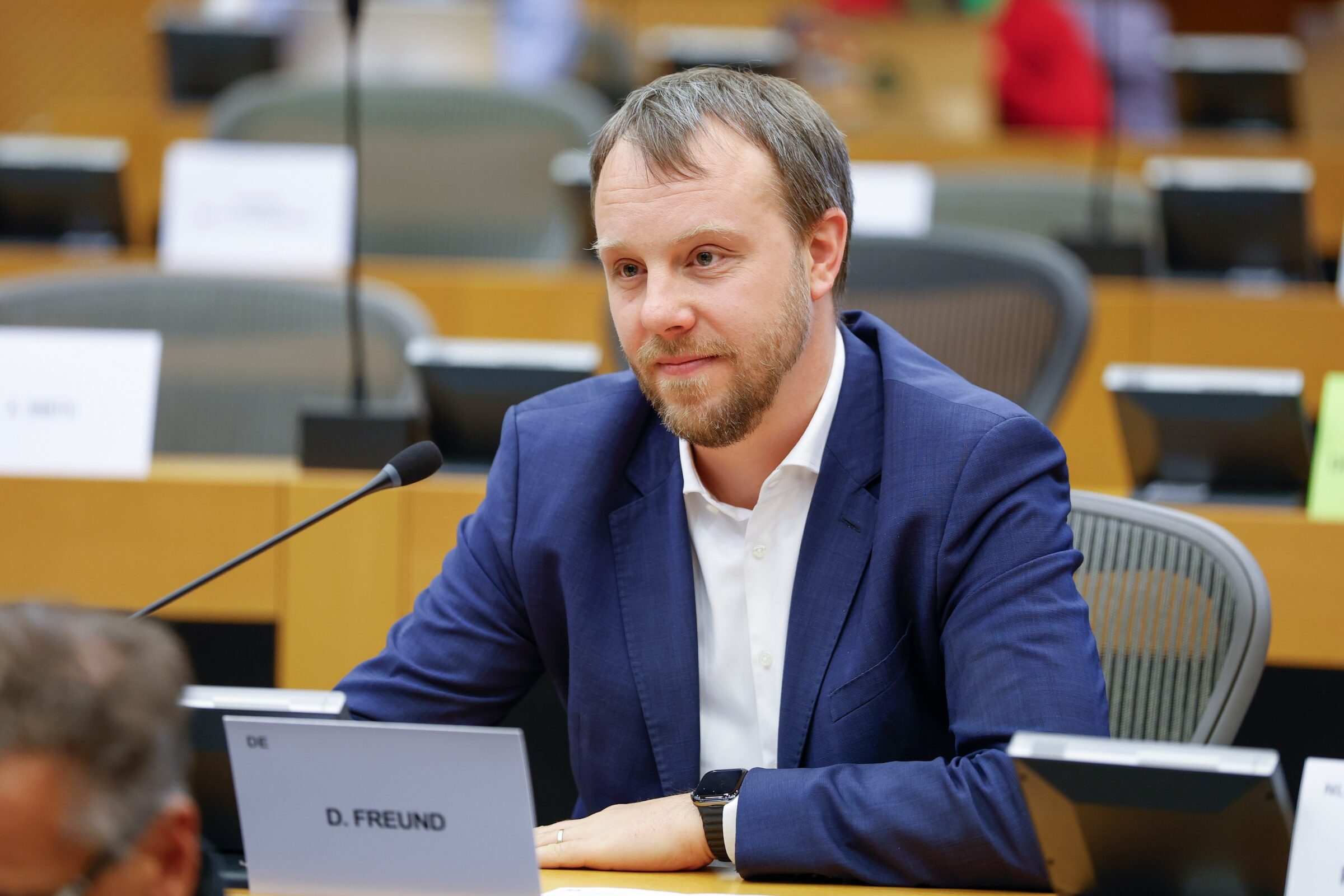
Daniel Freund, a German Green MEP leading talks on budget oversight, said there is also a lack of transparency about who has actually received these funds.
While some EU member states have compiled the required lists on beneficiaries, they are deemed useless and inaccurate in many cases, according to Freund.
And if accurate information is not provided within a six-month deadline, the European Parliament would consider escalating the issue to the European Court of Justice, he added.
‘Not a cash machine’
His discontent was echoed by Monika Hohlmeier, a German MEP from the centre-right European People's Party (EPP) and who is leading talks on the file.
"Europe’s budget is not a cash machine where money is simply taken from and disappears. It is a promise to deliver tangible results and real-life impact," she said, in a press statement.
But the EU Commission has since proposed extending a version of the RRF approach to the next seven-year-long-term EU budget, spooking financial watchdogs.
The Luxembourg-based European Public Prosector's Office (EPPO) has repeatedly called for both transparency and the traceability of EU funds.
It is also dealing with over 300 cases linked to the RRF, with estimated damages hovering around some €2.8bn.
Similar warnings have been issued by the European Court of Auditors, which in a report last year warned against using the RRF as a blueprint for any future EU budgets.
Those warnings appear to have been broadly ignored by the commission, however, which says the RRF stands to increase real GDP in the EU by up to 1.4 percent this year.
"We are seeing real investments that are making real, tangible impacts across Europe," said Valdis Dombrovskis, the EU commissioner in charge of the economy, in comments made late last month.
Dombrovskis said countries that had received substantial RRF allocations have also seen their economies boosted.
Average GDP growth in Italy, Spain, Poland, Croatia and Greece was over four percent in the period from 2021 to 2024, he added as examples.

![[Interview] ‘Some of the resistance comes from people fearing they’ll end up without a job,’ says industry expert on Europe’s slow electrification](https://static.euobserver.com/2026/07/anja-van-de-gronde-PY7r5dJ_v-Y-unsplash-2400x1602.jpg)




 Nikolaj Nielsen