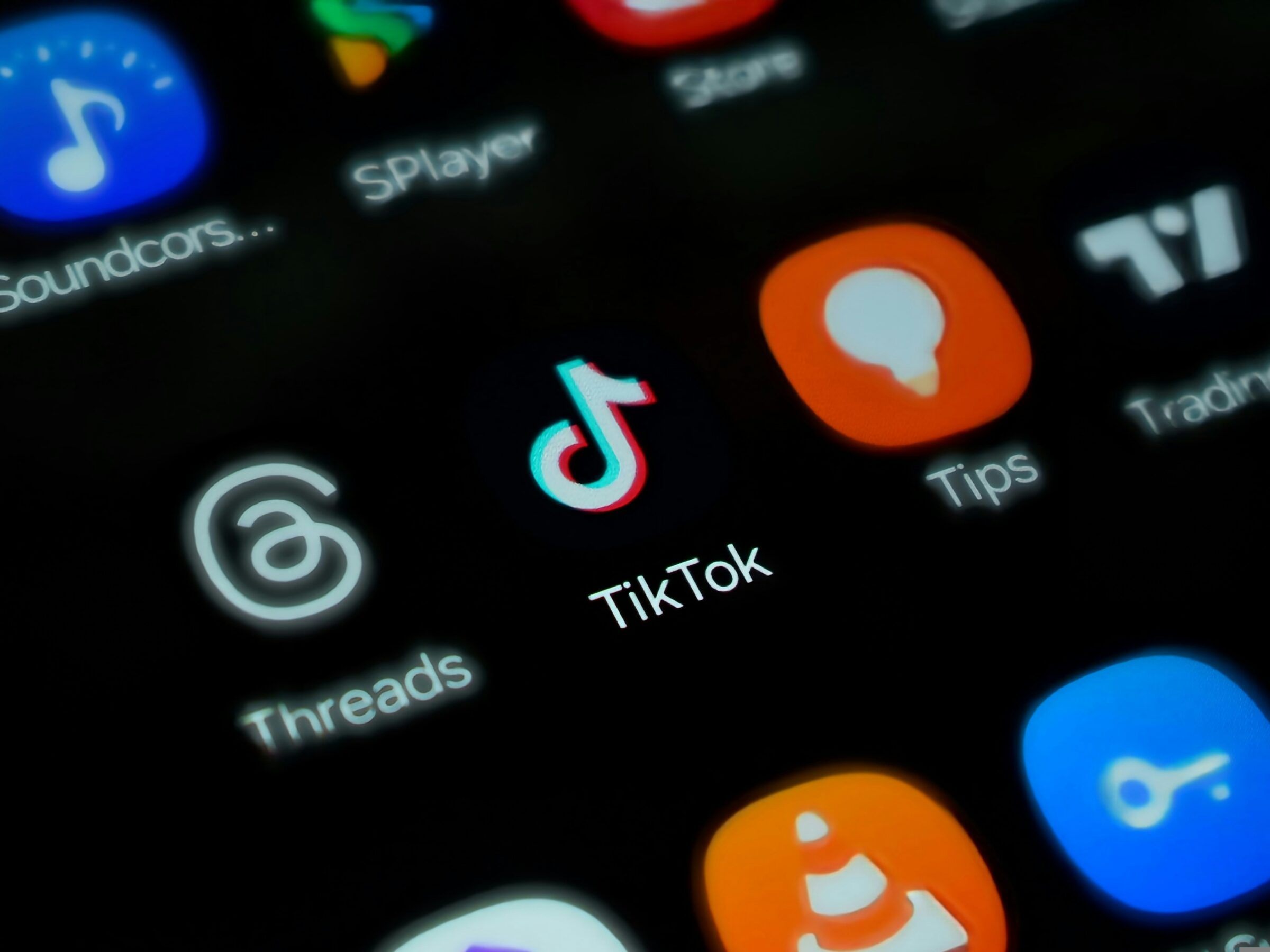
The European Commission preliminarily found TikTok in violation of the Digital Services Act (DSA) on Friday (6 February), for breaching the EU’s addictive design rules.
Under the DSA, online platforms have certain risk assessment and mitigation obligations.
Brussels has reason to believe that TikTok did not adequately assess the addiction risks, especially to minors, related to integrated design features, such as infinite scroll — arguing its reward content system can “shift the brain of users into ‘autopilot mode’.”
A senior EU official said: “ We are particularly taking issue that TikTok disregarded relevant evidence on excessive use of its platforms.”
“There’s a general rule in the DSA that the best scientific evidence and expert knowledge has to be taken into account when assessing these risks. And we found these really serious shortcomings in the system,” the official added.
Beyond risk assessment, the commission also suggests that the platforms’ integrated risk-management measures fail to truly manage risk.
“Almost all features that have the functionality to skip, delay, snooze or bypass can be very easily dismissed,” said the same senior official.
TikTok can now defend itself against the preliminary findings, but if found to have breached the DSA, the Chinese service could face a fine equal to six-percent of its annual global turnover.
Social media addiction, especially amongst adolescents, has become a global health topic in recent years.
In 2024, the World Health Organisation called on lawmakers to help address the increase in online addiction that the organisation is seeing.
“Social media addiction can have detrimental effects on the developing minds of children and teens. The Digital Services Act makes platforms responsible for the effects they can have on their users,” said Henna Virkkunen, commission vice-president for tech.
But the idea of further regulating social media is a current initiative for the EU institutions, with the executive expected to announce the Digital Fairness Act to address regulatory gaps.
Meanwhile, the European Parliament passed a report in November calling for stricter rules on addictive practices, and suggests an under-16 social media ban.
The commission began investigating the platform for potential breaches in 2024, focusing on its addiction risk, recommendation system, and violations of advertising transparency. TikTok agreed to adapt its transparency in December 2025.
The commission suggests the platform will need to implement real screen breaks, disable infinite scroll, and adapt recommender systems.
“The commission’s preliminary findings present a categorically false and entirely meritless depiction of our platform, and we will take whatever steps are necessary to challenge these findings through every means available to us,” said a spokesperson from TikTok.
TikTok announced it had more than 200 million users in Europe (the European Economic Area plus the UK) in 2025.
This article was updated to include the quote from TikTok spokesperson



 EU’s ‘Voldemort’ problem: talking about China without mentioning China





 THIS WEEK: Angry Trump meets EU leaders at G7 summit, as Ukraine starts accession talks
 Owen Carpenter-Zehe