Production: By Europod, in co-production with Sphera Network.
EUobserver is proud to have an editorial partnership with Europod to co-publish the podcast series “Briefed” hosted by Léa Marchal. The podcast is available on all major platforms.
You can find the transcript here if you prefer reading:
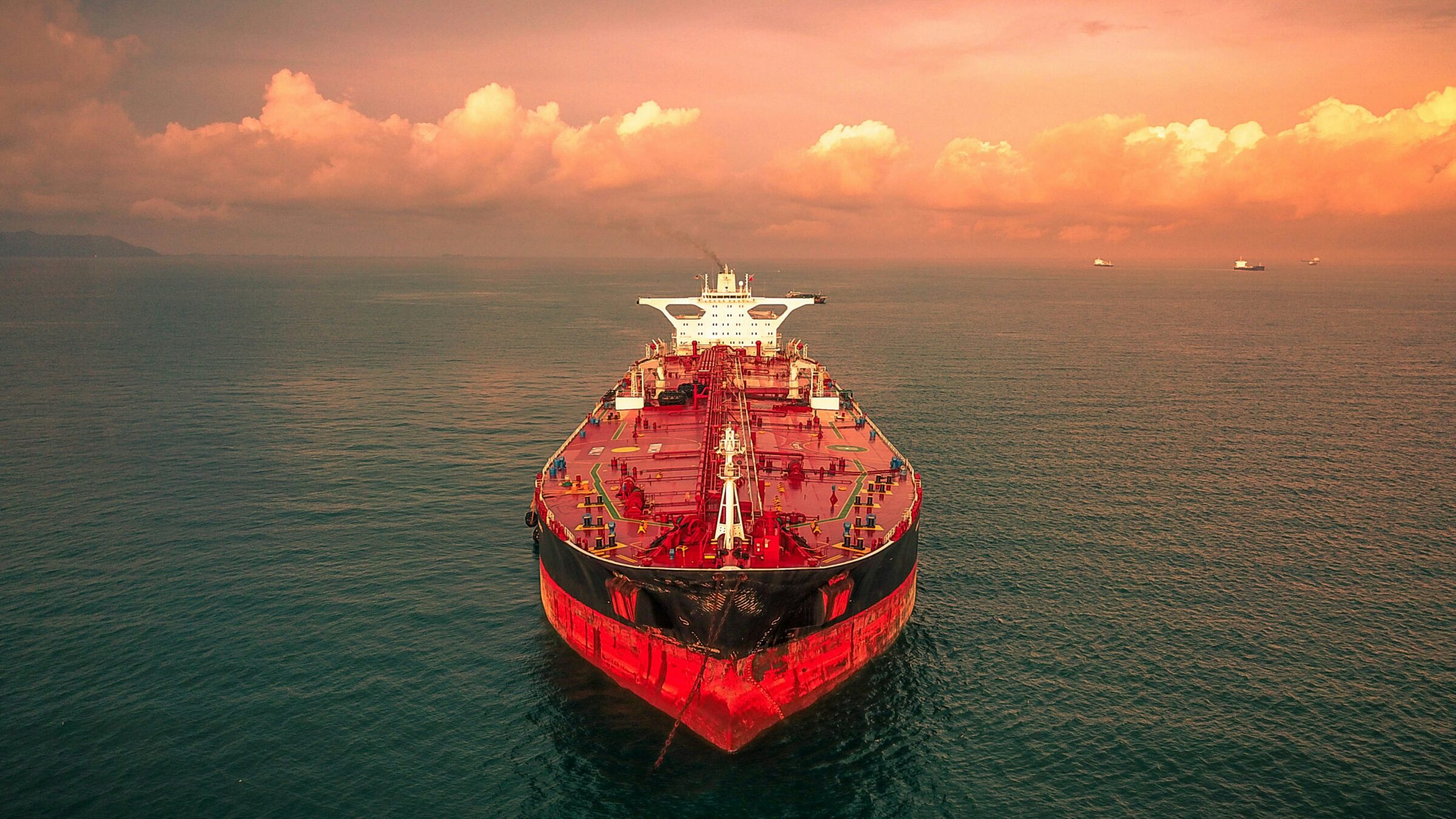
Iran is now blocking the Strait of Hormuz, through which one in five barrels of oil and a quarter of the world’s liquefied natural gas transit.
As oil and gas prices rise, should Europeans be worried about a new energy crisis?
“If ships attempt to pass through the Strait of Hormuz, the Revolutionary Guards and the navy will set them on fire,” the Iranian military declared on Monday.
At its narrowest point, the Strait of Hormuz is 39 kilometers wide. Located between Iran to the north and Oman to the south, it connects the Persian Gulf to the Indian Ocean. Every day, tankers transport about 20 percent of the world’s oil consumption through this strait.
Liquefied natural gas (LNG) also flows massively through this route. It is estimated that about a quarter of the world’s LNG passes through the Strait of Hormuz.
Following the first US and Israeli attacks on Iran on Saturday, February 28th, the Iranian regime announced it would block the Strait of Hormuz in retaliation.
At present, the Iranian military claims the passage is closed, but the United States says otherwise. However, no commercial vessel wants to risk passing through, as they could encounter sea mines or come under fire from Iranian ships or drones.
Are there alternatives to the Strait of Hormuz?
There are several: Saudi Arabia, for example, is prepared for such disruptions and has multiple pipelines, including connections to the Red Sea. The United Arab Emirates also has a direct link to the Gulf of Oman, allowing it to bypass the Strait’s blockade.
That said, the available alternatives cannot maintain the usual daily transit levels, especially since several refineries in Saudi Arabia and Qatar have been hit by strikes. According to Reuters, supplies are expected to be nearly halved.
On Monday, March second, gas and oil prices soared. Brent crude, the global benchmark for oil prices, reached $82 a barrel on Tuesday. That’s $20 more than a month ago.
As for gas, its price surged by over 40 percent on Monday.
Is the risk of a global shock significant?
Let’s take a quick look back: At the start of the war in Ukraine in 2022, the price of a barrel of oil reached up to $139.
But the record was set earlier, in 2008 during the global financial crisis, with a barrel at 150 dolalrs.
Today, Bloomberg estimates that the barrel could reach $108 in the worst-case scenario.
So, how much should Europeans worry about heating and fuel costs?
Let’s start with oil: The price increase will affect the EU’s stocks, even though European countries source most of their oil from outside the Middle East.
However, the impact will be partial, as two-thirds of the cost of fuel actually comes from refining, distribution, and taxes.
Thus, the increase at the pump could amount to less than ten cents.
This scenario assumes, however, that Brent crude does not rise much beyond $80, far from the $108 envisioned in the worst-case scenario.
Other factors could come into play. For example, if more refineries in the Gulf are attacked.
What about gas prices?
The situation here is more delicate. The rise in gas prices is already more significant than that of oil, and it could continue to increase as the conflict drags on.
For European consumers, the impact may still be reduced—at least in the short term—thanks to fixed energy contracts based on previously lower prices.
European countries are also differently exposed to these fluctuations, depending on their reliance on gas. In Italy and the Netherlands, gas still accounts for more than a third of the energy mix, while Finland, Sweden, and Estonia use hardly any.
In any case, Europeans should prepare for energy prices to rise in the coming months, although this will likely be less dramatic than in 2022.
The duration of the conflict will play a key role in price fluctuations and their impact at the pump.
Europe is, in any case, far less affected than Asia, particularly China, which heavily depends on the oil and gas passing through the Strait of Hormuz.


![[Interview] ‘Some of the resistance comes from people fearing they’ll end up without a job,’ says industry expert on Europe’s slow electrification](https://static.euobserver.com/2026/07/anja-van-de-gronde-PY7r5dJ_v-Y-unsplash-2400x1602.jpg)
![[Interview] The US Democrat trying to convince Brussels to stand up to Trump on methane](https://static.euobserver.com/2026/07/Captura-de-Pantalla-2026-07-13-a-las-18.28.15.png)
 Are oil markets too optimistic?