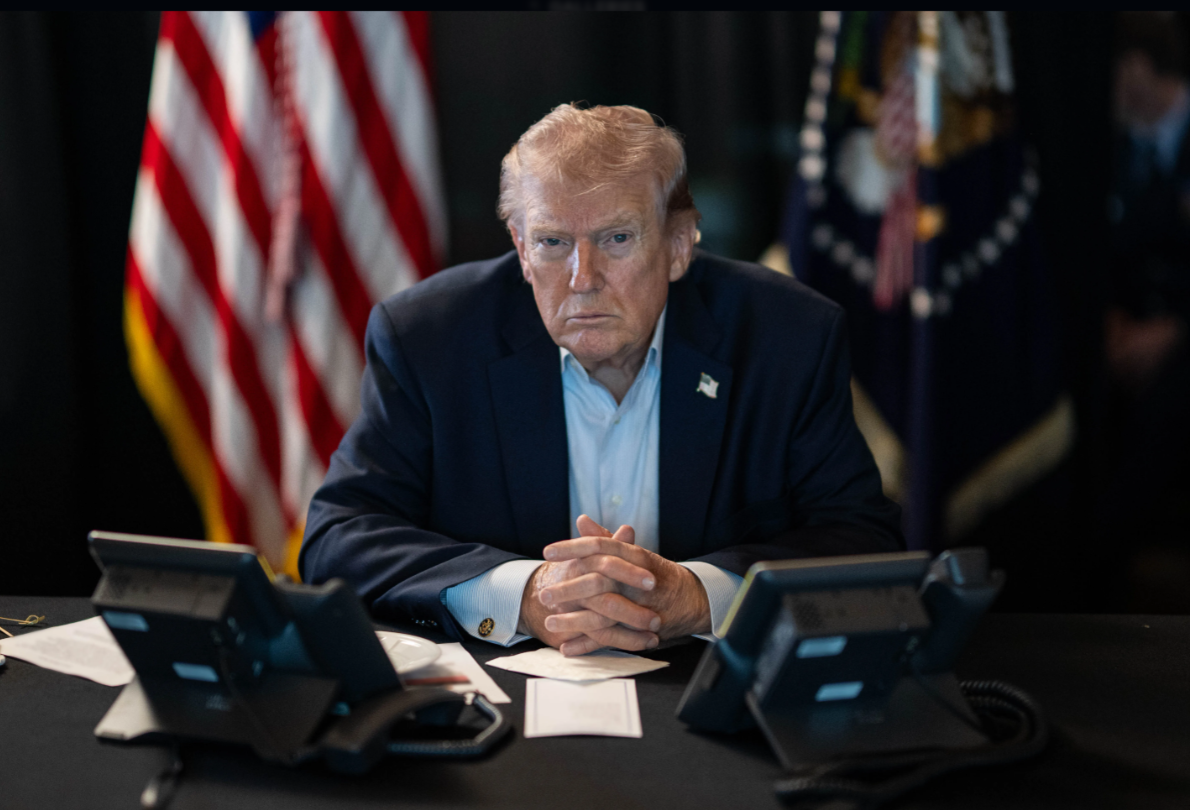
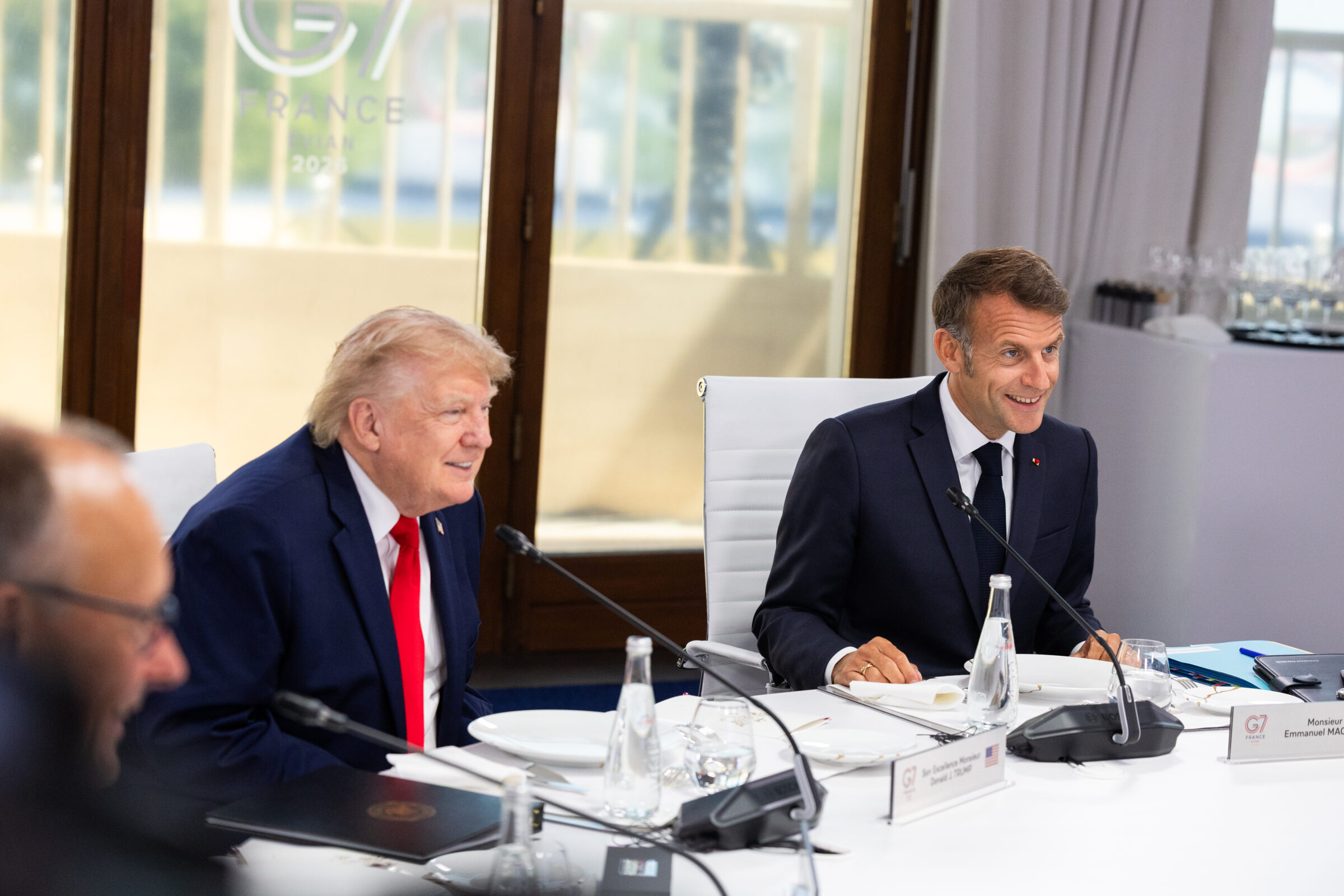
Donald Trump’s upcoming meeting on Thursday (14 May) with Chinese president Xi Jinping marks an important flash point in the long-running rivalry between the nations and their leaders.
The intensity of the rivalry has ebbed and flowed, with periods of animosity giving way to uneasy reproachment. As Trump heads to China, it’s unclear if the current stand-off between the countries will persist or not.
The relationship between the United States and China across the Trump administrations has been characterised by a dual-track approach.
Trump Mark I (2016-2020) implemented aggressive national security restrictions on information and communication technologies and punitive economic measures, driven in part by figures such as US trade representative Robert Lighthizer and National Security Council official Matt Pottinger.
Others, most notably treasury secretary Steven Mnuchin, prioritised financial market stability and continued economic engagement.
By the end of his first term, Trump’s own priorities appeared to shift toward the latter approach, as he sought to finalise a large-scale trade agreement to cement his legacy as the ‘Dealmaker-in-Chief.’
Escalation then de-escalation. And repeat
This dual-track approach has re-emerged in the second Trump administration with greater volatility, alternating between escalation and de-escalation.
During the 2024 campaign, Trump adopted strongly hawkish rhetoric, reinforced by early appointments such as Marco Rubio as secretary of state — who remains under Chinese sanctions for his positions on Hong Kong and Xinjiang — and Elbridge Colby as under secretary of defense for policy, a proponent of strengthening US military posture in the Indo-Pacific to counter China’s regional influence.
The China hawks left their high-tide mark with the ‘Liberation Day’ tariffs in April 2025. As the American market looked prone to crash, with US stocks declining sharply amid fears of a global trade war, and Beijing retaliated by restricting exports of rare earths and critical minerals, the hawks were left a diminished force
Faced with the full force of China’s economic coercion, the Trump administration retreated to a more dovish posture.
The hawks who championed the Liberation Day measures have been sidelined, with Trump dismissing several key national security figures known for their hardline stance on China, including David Feith and Alex Wong.
Pentagon shifts
This softening is most evident in internal White House directives, with a broader effort to manage the tone of official messaging on China.
The administration reportedly instructed the Pentagon to temper its assessment of China in its latest report.
This rhetorical shift is reinforced by policy, most notably the decision to allow Nvidia’s H200 AI chips to be sold to China, despite long-standing bipartisan support for restricting China’s AI development.
The administration’s argument is that this does not pose a meaningful national security risk and could instead deepen China’s reliance on the US AI stack, gradually constraining its ability to develop a fully independent ecosystem.
More broadly, this shift is reflected in the administration’s emerging economic approach of “managed trade,” as articulated by US trade representative Jamieson Greer and treasury secretary Scott Bessent.
Greer has expressed a preference for stability over escalation, outlining a framework of reciprocal purchasing between the US and China. Central to this approach is a proposed Board of Trade designed to formalise trade flows by identifying targeted areas of mutual exchange.
Boeing vs soybeans
Under this framework, US officials are pressing Beijing to increase imports of Boeing aircraft and American energy exports, including coal, oil, and natural gas. In return, Chinese negotiators have indicated willingness to expand agricultural purchases, including commitments to import 25 million metric tonnes of US soybeans annually over the next three years.
This approach follows a sharp 26 percent decline in US exports to China by the end of 2025, reinforcing the administration’s push to stabilise bilateral trade through structured, sector-specific arrangements.
It would be a mistake, however, to suggest the administration has entirely forgotten the risks China poses; rather, it is walking a fine line.
This is evident in the “Pax Silica” initiative, which openly acknowledges the risk of Beijing weaponising supply chains and aims to build trusted tech ecosystems among allies, as well as in the recent “nationality-neutral” ban on foreign-made internet routers, which in practice functions as a de facto restriction on the most significant perceived risks — namely Chinese firms such as TP-Link — thereby effectively targeting China without explicitly naming it.
Hostility between the US and China will not go away, but Trump’s cautious approach shows the conflicting views of the trans-Pacific relationship in the US policy establishment.
China is a rival, but also an enticing market. It is a security threat, but it has the economic and strategic weight to make US politicians think twice before launching coercive actions against the country. This ambiguity is likely to last.
 EU’s ‘Voldemort’ problem: talking about China without mentioning China