Production: By Europod, in co-production with Sphera Network.
EUobserver is proud to have an editorial partnership with Europod to co-publish the podcast series “Briefed” hosted by Léa Marchal. The podcast is available on all major platforms.
Find the full transcript below:
Moscow was hit by 600 Ukrainian drones overnight from Saturday to Sunday.
This comes after a 9 May Victory Day parade on Red Square that was noticeably scaled back.
Is Russia starting to lose momentum in its war against Ukraine?
EU top diplomat Kaja Kallas: “The dynamics of the war are changing. Ukraine is in a much better position than a year ago, but of course, there is no time for complacency.”
According to Kaja Kallas, the EU’s high representative for foreign affairs, Moscow is having record battlefield losses.
So is Russia slowly losing the war?
In April, Russia lost 116 square kilometres of territory in Ukraine, according to the Institute for the Study of War. For the second month in a row, Russia lost more territory than it gained.
But what caught international media attention was the form taken by this year’s May 9 parade in Moscow. Instead of the usual show of force, Russia scaled down the event and didn’t even display tanks.
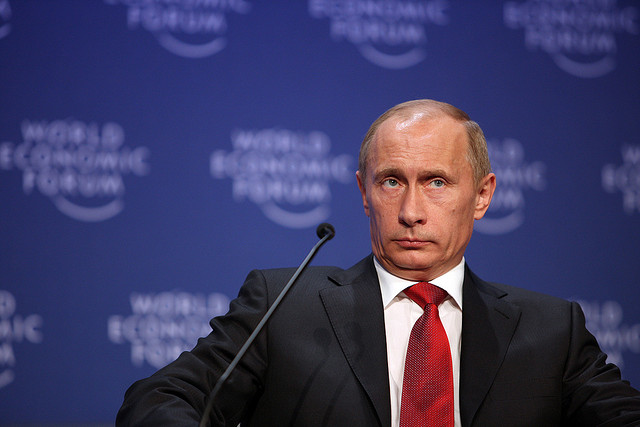
Vladimir Putin’s speech lasted only about ten minutes, and the entire event no more than 45 minutes.
According to many experts, this was an effort to limit exposure to a potential attack.
And for good reason: on the night of Sunday, 17 May, Ukraine launched 600 explosive drones toward Moscow. According to the Kremlin, more than 550 of them were intercepted. But a few still managed to break through Russia’s air defences.
A refinery, a fuel storage and pumping station were hit, along with a microchip manufacturing plant.
Russian authorities say the attack left four people dead.
Now looking at Russia’s war effort more broadly,
Some observers, including a former senior Russian official cited by The Economist, describe a growing sense of fatigue within what they call “Putinism” in Russia.
But does this really mark a turning point?
There have already been major Ukrainian offensives that sparked similar hopes. One example is the Kharkiv counteroffensive in September 2022.
Within just a few days, Ukraine retook thousands of square kilometres in the Kharkiv region.
At the time, many Western analysts seriously considered the possibility of a Russian defeat on the battlefield.
But four years later, we’re still more or less at the same impasse.
And in fact, the drone strike came in retaliation after Russia launched more than one thousand four hundred missiles and drones against Ukraine in just 24 hours — an attack that killed at least 24 people.
So whether this is a turning point or not remains too early to say. But these developments still matter deeply in the war: they are about shifting the balance of power.
Claiming victories allows Ukraine and its European allies to strengthen their narrative and build arguments for continued support.
Because, as the Hungarian media outlet 444, which is part of the Sphera network alongside Europod, explains, Russia is trying to convince the West that supporting Ukraine is pointless, a waste of money, and that Kyiv should instead be pushed to accept Russian demands.
And that message is finding receptive ears, starting with the US president.
We can recall that moment in the Oval Office in Washington in February this year, when Donald Trump told Volodymyr Zelensky that he “didn’t have any cards left to play.”
A few weeks ago, German chancellor Friedrich Merz suggested that Zelensky may ultimately have no choice but to cede some territory to Russia.
In this context, even small Russian losses matter. They allow Ukraine and European leaders to keep pressure on Vladimir Putin.
 What went wrong? Russian missile attack on open-air weapons exhibition exposes catalogue of errors (Ukraine Battlefield update, Day 1,615)