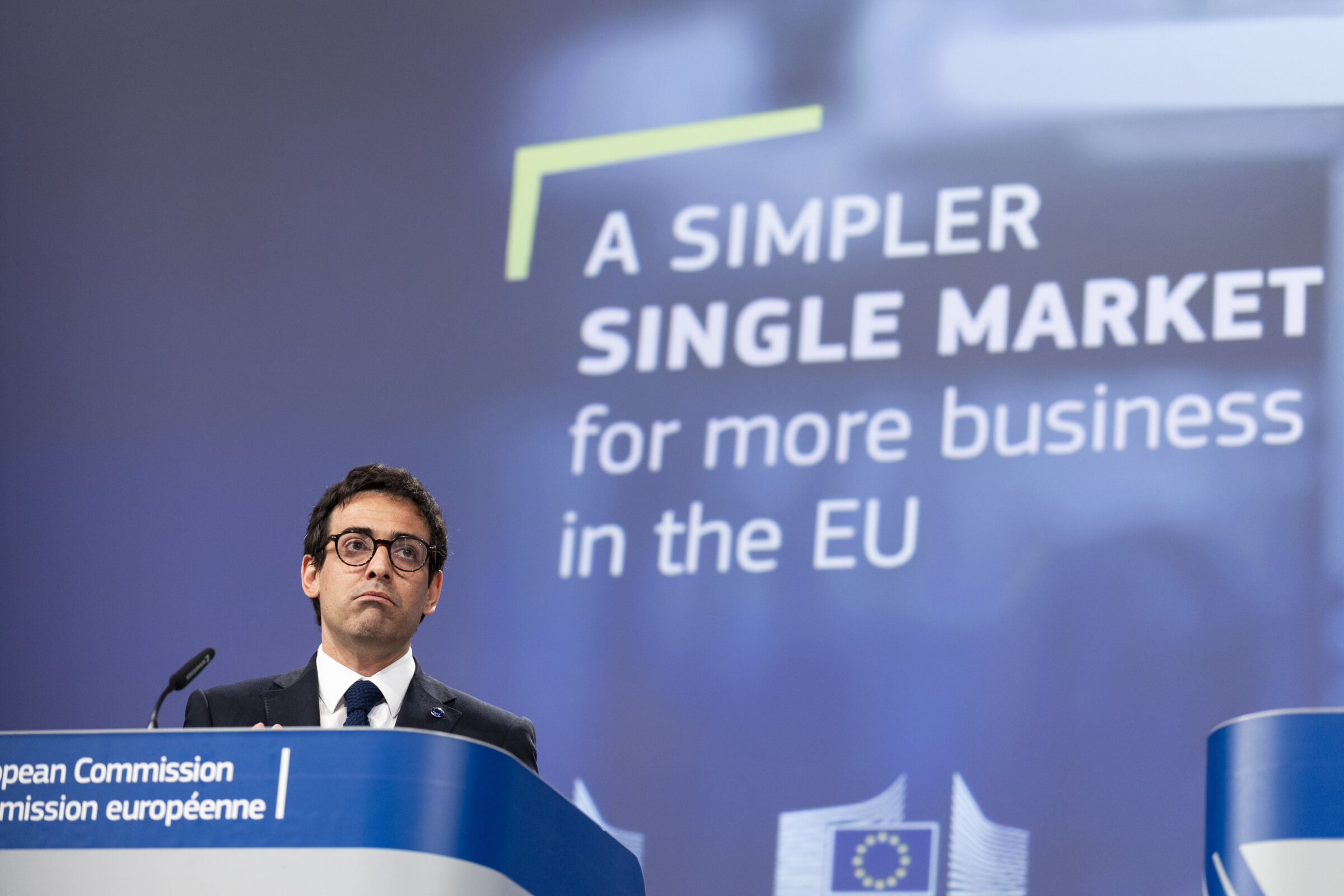
The European Commission’s drive to cut corporate red tape partly rests on a competitiveness narrative that is not supported by its own evidence, according to experts and data from the European Investment Bank.
They show that in fact US companies report greater regulatory obstacles to investment than their European counterparts.
Europe’s alleged competitiveness gap with the United States and China has become a defining theme in Brussels policymaking. This was the bottom line in the 2024 Letta report on the internal market and the 2025 Draghi report titled The Future of European Competitiveness.
“The problem is not that Europe lacks ideas or ambition. We have many talented researchers and entrepreneurs filing patents. But innovation is blocked at the next stage: we are failing to translate innovation into commercialisation, and innovative companies that want to scale up in Europe are hindered at every stage by inconsistent and restrictive regulations,” reads the Draghi report.
Red tape, meaning unnecessary and burdensome regulations, has been cited as the major source of the problems for European companies.
For example, the Draghi report claimed that more than 60 percent of EU companies consider regulation to be an obstacle to investment.
Although the figure is correct, it is misleading, says Jonathan Zeitlin, professor emeritus of public policy and governance at the University of Amsterdam and visiting fellow at the European University Institute in Firenze.
“The selective use of data to support claims about regulatory burden, which underlie some of the Omnibus proposals, is close to political manipulation. It’s definitely cherry-picking,” he said.
While academics, the European Ombudsman and NGOs question the wisdom, the methods and the consequences of attempts to cut red tape in EU-regulations, a basic question remains: Where is the evidence for a regulatory gap between the EU and the US?
In an interview with EUobserver, Zeitlin elaborates on his criticism, describing the reasoning behind as close to political manipulation. Below is why:



 THIS WEEK: ECB set to hike rates, as capital markets union and climate top the EU agenda


 ‘Have you eaten today?’ What an incident on an Italian train taught me about EU values