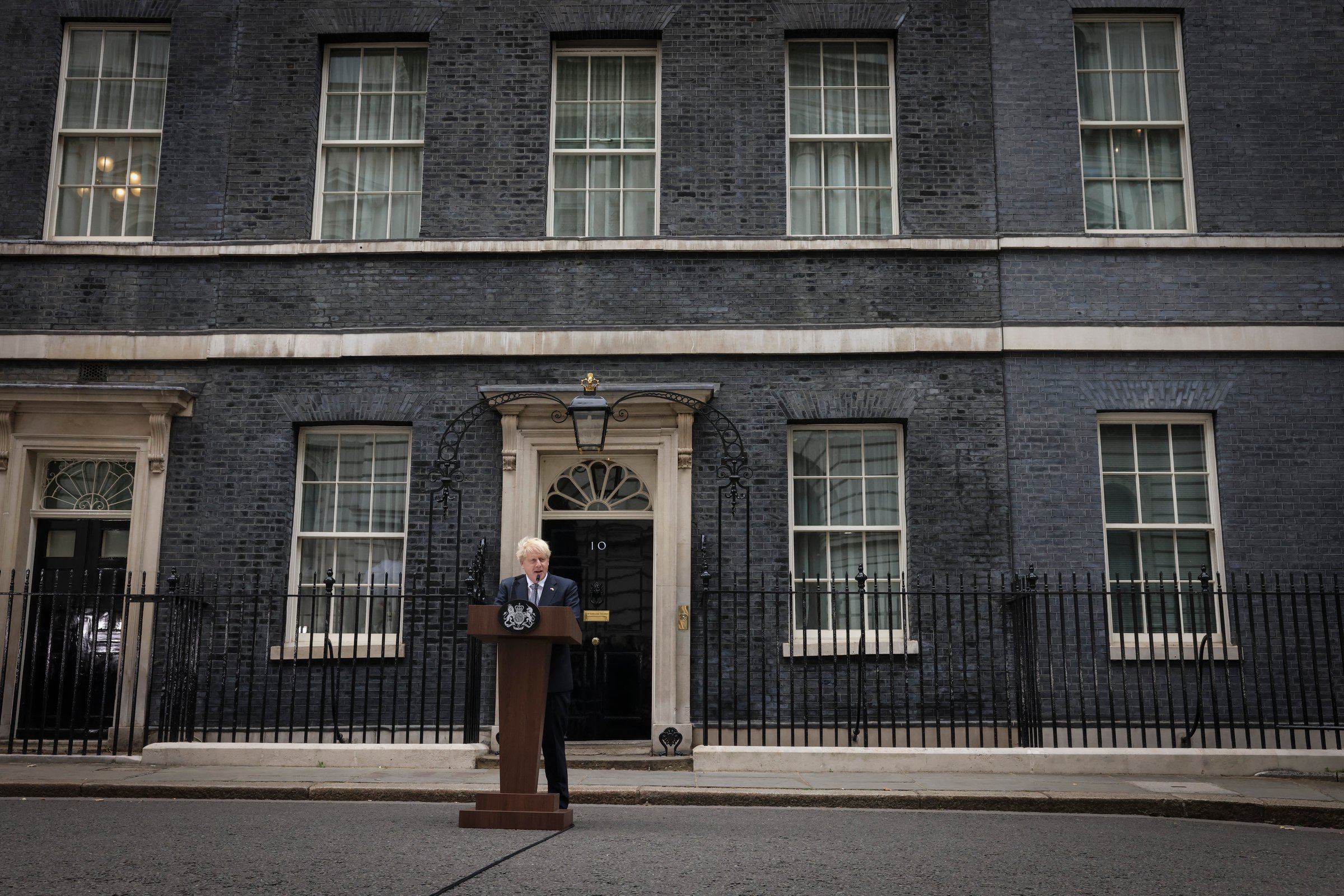
British prime minister Boris Johnson resigned as Conservative party leader on Thursday afternoon (7 July), starting a race among Conservative MPs to replace him, but leaving behind a range of issues — not least Brexit, Northern Ireland, and Scottish independence — for his successor to deal with.
After resignations from more than 50 ministerial and government aides in the space of 48 hours, Johnson admitted he had lost the confidence of his own party, but declared he would stay on as prime minister until a successor was elected — by the Conservative party, not by the British public.
Without apologising — instead blaming the “herd instinct” of his own MPs at Westminster— Johnson resigned outside Downing Street, while conceding “no one is remotely indispensable” in politics, and insisting he still had a “vast mandate” and his party was only “a handful of points behind in the polls”.
The Conservatives have governed since 2010, albeit in coalition with the centrist Liberal Democrats from 2010 to 2015.
It was still unclear what the exact timetable for electing an internal party successor to Johnson would be, while the opposition Labour party called for a general election, not a change in party leader.

 Matt Tempest