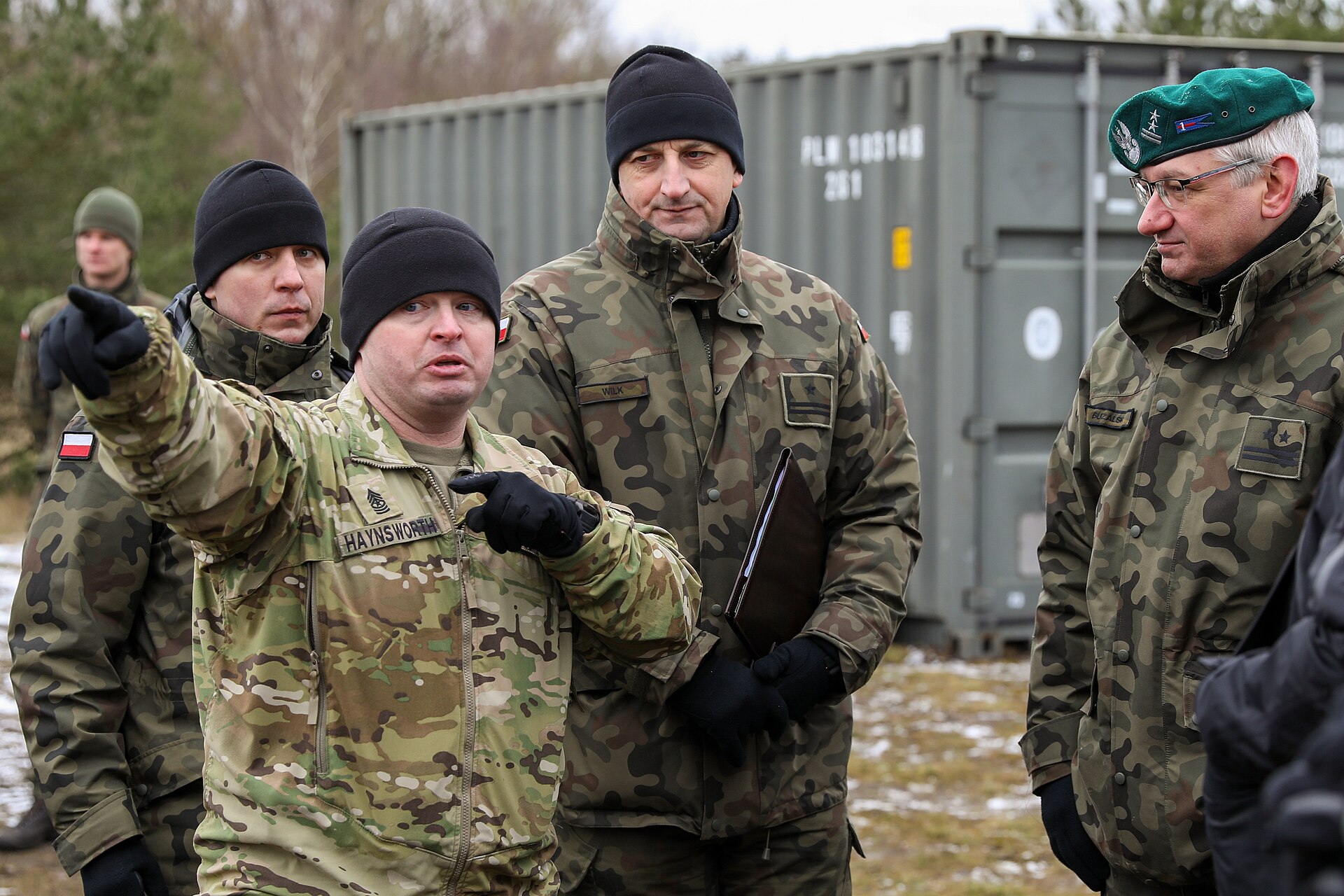
The US formally launched a “strategic” Europe Posture Review of its military presence on the continent on Monday (27 July), aiming to push European allies to take more responsibility for their own defence.
“The outcome of this review will be an acceleration of Nato’s transition to a stronger, more equitable, and sustainable alliance, … incentivising and enabling allies to lead Europe’s conventional defence,” US under secretary of war Elbridge Colby said on social media.
“This will put Nato on the track for lasting, sustained success, especially as we confront simultaneous challenges across theatres,” he also said.
Colby had previously called for a reboot of the alliance into what he coined “Nato 3.0.” — an idea that some argue would inevitably speed up the alliance’s Europeanisation.
But the six-month Pentagon review was first announced by defence secretary Pete Hegseth during a Nato defence ministers’ meeting in Brussels on 18 June.
“It’s a review that some countries will fail, and others will pass with flying colours,” he said back then.
Hegseth announced the review after European allies declined to let US forces use bases on the continent to launch strikes on Iran, irritating further American president Donald Trump who described it as a “very foolish mistake”.
The review also follows the US 2026 National Defense Strategy, published in January, which explicitly states US forces will no longer carry the primary burden of defending Europe — shifting deterrence against China in the Indo-Pacific.
Thanks to increases in Nato defence expenditure targets (from two to five percent GDP), allies are “strongly positioned” to take responsibility for Europe’s defence, “with critical but more limited US support,” reads the strategy.
But experts argue that the removal of American troops in Europe goes not only against Europe’s security and stability but also against wider US interests.







 The threat of ‘total economic war’ looms. And July sees highest civilian deaths since 2022 (Ukraine Battlefield update, Day 1,616)
 Elena Sánchez Nicolás