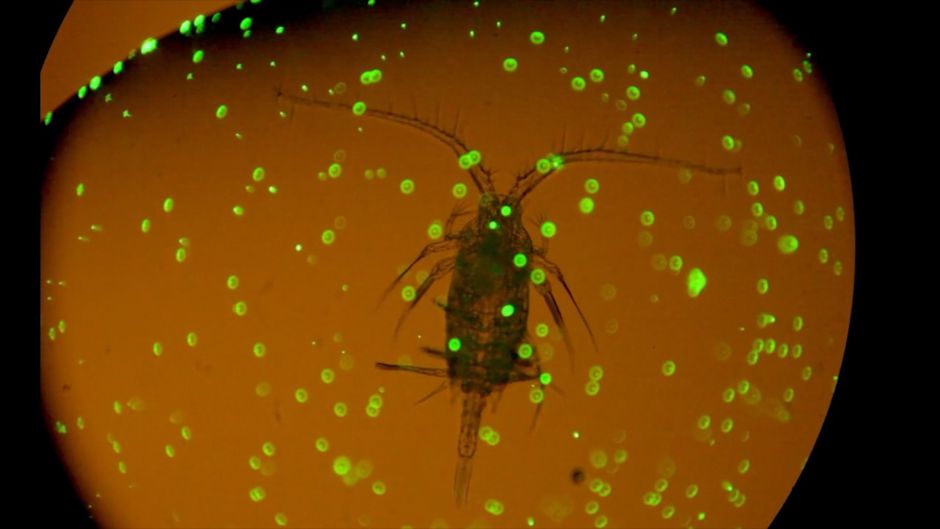
Leading scientists and conservation groups have said the EU’s plastics strategy must include “serious regulation” given the potential impact of microplastic pollution on human health.
The tiny particles – which come from degradation of larger pieces of plastic litter, pre-production pellets used by industry, car tyres, washed textiles and microbeads found in cosmetics – have been found in everything from sea salt and seafood to tap water and honey.
Currently there is no evidence to suggest that there is a food safety risk. The European Food Safety Authority (EFSA) has played down any concerns over what it has referred to as an “emerging issue”.
But experts urged the European Commission to apply the precautionary principle, and use its plastics strategy – due to be published this month – to deliver new laws to reduce their release and impacts.
“The problem is widescale and the concentrations are low,” explained Richard Thompson, professor of marine biology at Plymouth University in the UK, “but if we carry on as normal and have this conversation again in 20 years’ time we may well have reached concentration levels that are a concern.”
![[Interview] ‘Some of the resistance comes from people fearing they’ll end up without a job,’ says industry expert on Europe’s slow electrification](https://static.euobserver.com/2026/07/anja-van-de-gronde-PY7r5dJ_v-Y-unsplash-2400x1602.jpg)

![As birthrates decline and the workforce empties out, “in some countries, [people] are obliged to retire,”](https://static.euobserver.com/2005/04/677e4ac7c530bd9e00eb0ac007326e19.jpg)