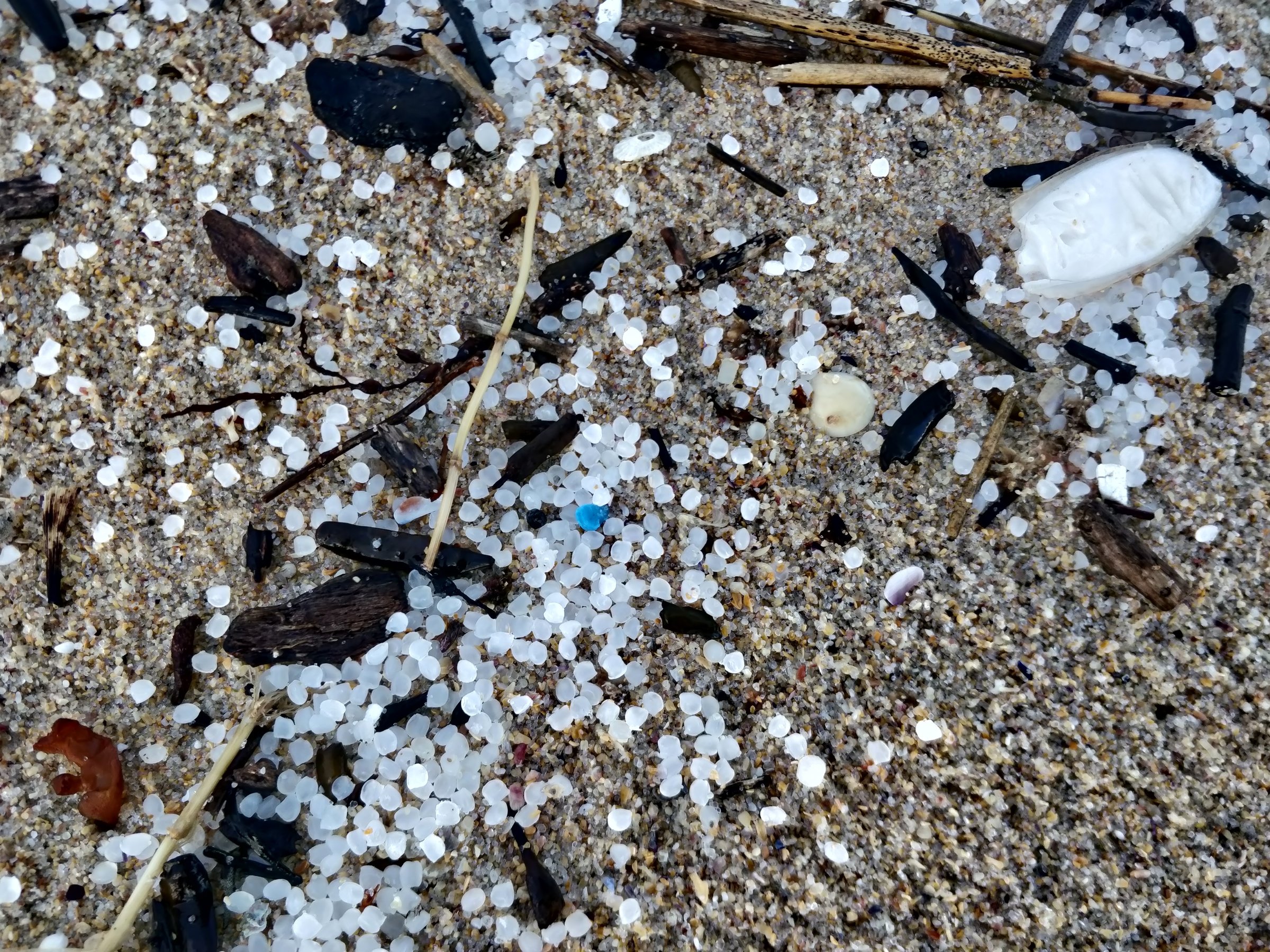
As the coastline of Galicia in northern Spain wakes up to another day with hundreds of volunteers cleaning microplastics from the beach, the EU has sounded the alarm about the impacts of the plastic pellets on the environment and human health.
The ecological disaster in Galicia resulted from a drama that took place last month off the Portuguese coast, but is now also extending to France.
In December, a cargo ship lost a container filled with 25kg sacks of these tiny microplastics, which have now washed up on the coasts of Galicia. But many of them remain in the sea — raising concerns among policy-makers and environmental campaigners.
These tiny round plastic pellets, known as nurdles, are the second-largest contributor to ocean microplastics, after tyre particles (a mixture of tyre fragments, including synthetic rubbers, fillers and softeners and road surface particles).
The EU environment commissioner, Virginijus Sinkevičius, was the first to raise the alarm this week, when he warned that the 25 tonnes of plastic pellets spilled off the Galician coast threatens the marine environment and economic activities such as fishing.
His remarks were followed by a debate in the European Parliament environment committee about EU rules on pellet losses — where MEP also expressed concerns about the impact of the recent spill.
“The raw materials used to produce these pellets are a growing risk,” Portuguese socialist MEP João Albuquerque, who is leading the parliament work on this file, said during the committee debate on Thursday (11 January).
![[Interview] ‘Some of the resistance comes from people fearing they’ll end up without a job,’ says industry expert on Europe’s slow electrification](https://static.euobserver.com/2026/07/anja-van-de-gronde-PY7r5dJ_v-Y-unsplash-2400x1602.jpg)

![As birthrates decline and the workforce empties out, “in some countries, [people] are obliged to retire,”](https://static.euobserver.com/2005/04/677e4ac7c530bd9e00eb0ac007326e19.jpg)
 Elena Sánchez Nicolás