Economists and monetary authorities are increasingly coming around to the view that inflation for the past two years was primarily driven by corporate price gauging, not wages or high demand.
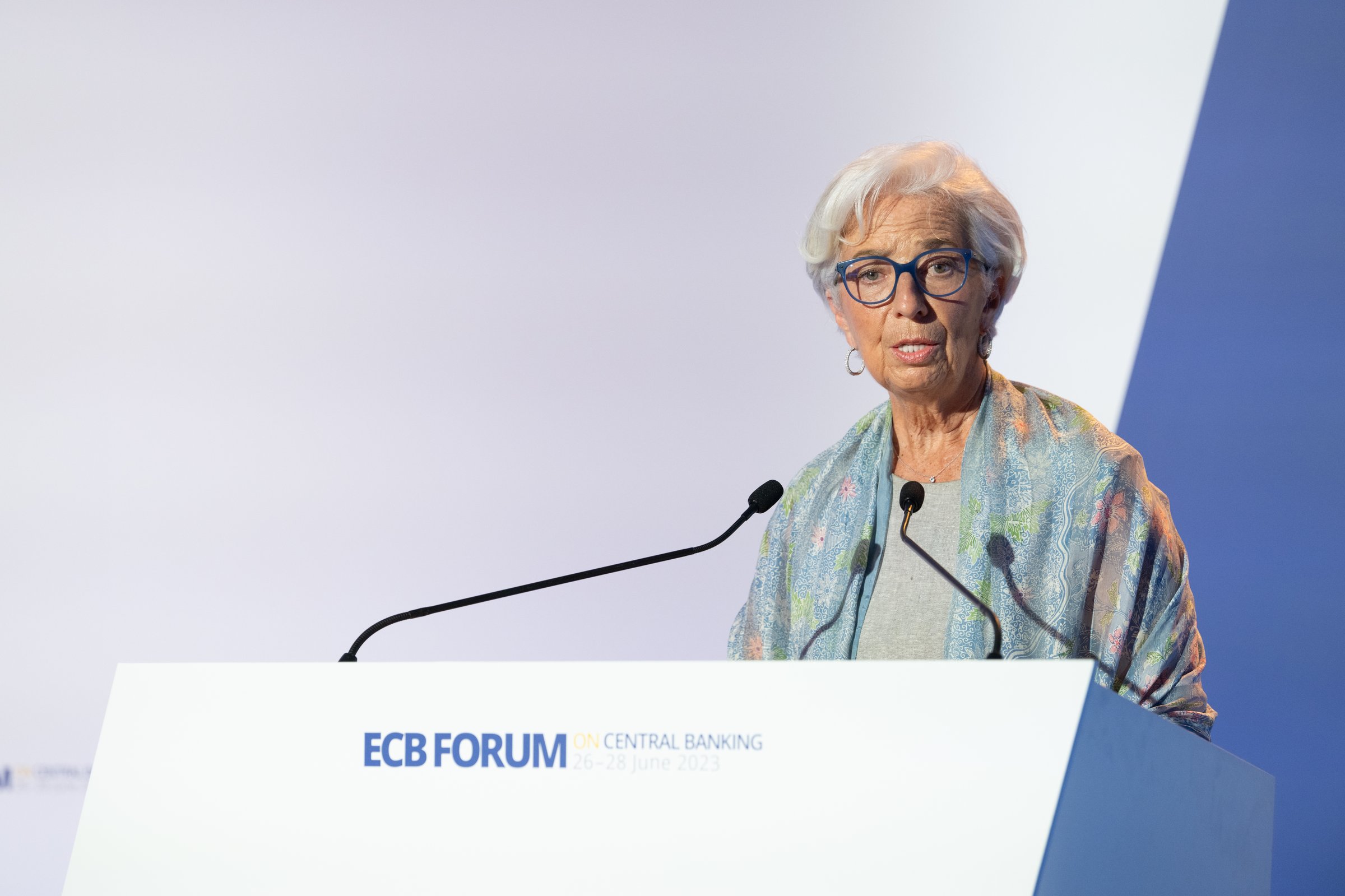
“Unit profits contributed around two-thirds to domestic inflation whereas, in the previous 20 years, the average contribution was one-third,” said European Central Bank president Christine Lagarde on Tuesday (27 June).
“We haven’t seen a rise in aggregate demand in Europe [since 2019],” said Silvana Tenreyro, a member of the monetary policy committee of the Bank of England.
Speaking at the ECB Forum, a three-day event which takes place annually in the palace town of Sintra in Portugal, Lagarde set the stage for discussions about inflation, which has proven more “persistent” than expected despite demand not growing.
As one of the main events for top academics, economists and central bankers to gather and discuss monetary policy, markets will especially keep an eye on the headline debate between ECB’s Christine Lagarde, US Federal Reserve chair Jerome Powell, Bank of England chief Andrew Bailey and Kazuo Ueda of the Bank of Japan —which will take place on Wednesday.
Core inflation in May was 5.3 percent, lower than a month before. But the ECB is mandated to bring inflation down to two percent.
Faced with “persistent” inflation, Lagarde said interest rates would be raised further in July.
![[Interview] ‘Some of the resistance comes from people fearing they’ll end up without a job,’ says industry expert on Europe’s slow electrification](https://static.euobserver.com/2026/07/anja-van-de-gronde-PY7r5dJ_v-Y-unsplash-2400x1602.jpg)



 Wester van Gaal