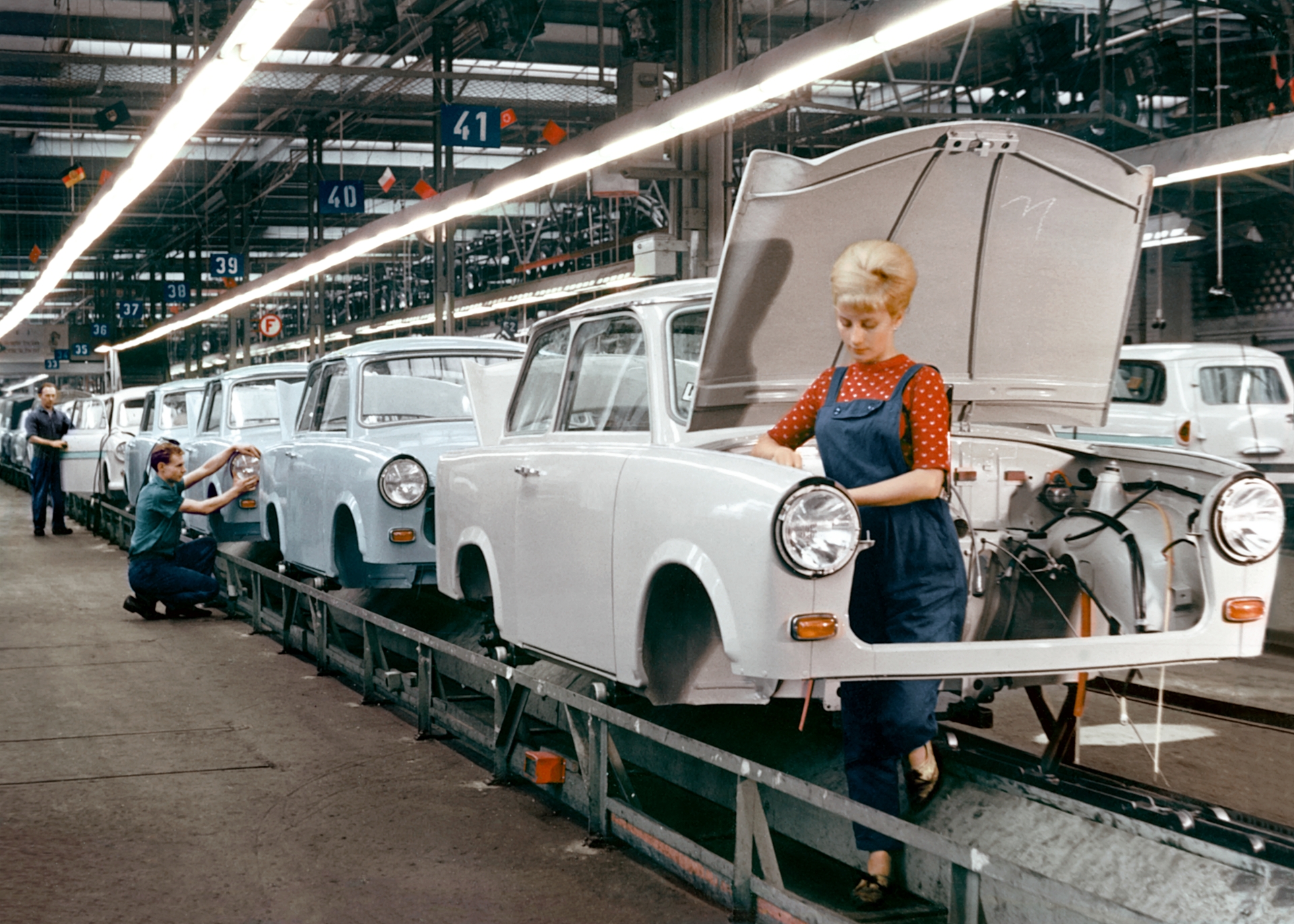
As every good European knows, the EU began life after the Second World War as the European Coal and Steel Community.
But within that small club of members, born out of the rubble of a continent, one country in particular, a big exporter of both steel and coal, offered an real-time, almost laboratory conditions, experiment through the post-war decades of what became the EEC (European Economic Community), then the European Community, then the European Union, in the competing allures of capitalism vs communism: Germany.
Or, more specifically, West Germany (a founding member of the coal and steel community), and East Germany (a member of the Warsaw Pact and a socialist state barely independent of Moscow and the USSR.)
Split down the middle — both geographically and politically — the two new German states are the subject of a new exhibition that opens this week at the Deutsches Historiches Museum [German History Museum] in Berlin: Fortschritt als Versprechen — Industriefotografie im Geteilten Deutschland [Progress as a Promise — Industrial Photography in a Divided Germany].
It covers not just coal and steel, but also the automobile industry, textiles, chemicals (the 1959 DDR five-year plan for its chemicals industry came with the slogan: Bread, Prosperity, Beauty) and many others, from the years 1949-1990 (when east Germany was formally dissolved and amalgamated into West Germany).
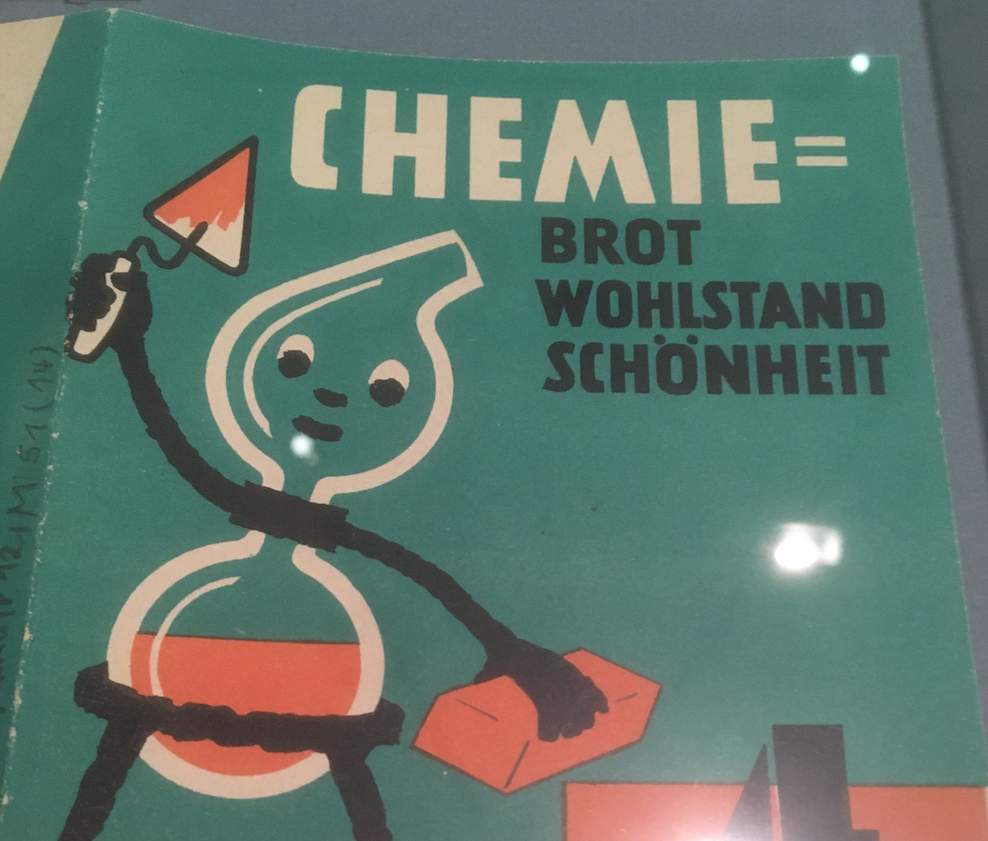 ‘Bread, Prosperity, Beauty’ — East Germany’s five-year plan for its chemical industry, 1959

![As birthrates decline and the workforce empties out, “in some countries, [people] are obliged to retire,”](https://static.euobserver.com/2005/04/677e4ac7c530bd9e00eb0ac007326e19.jpg)
 Matt Tempest