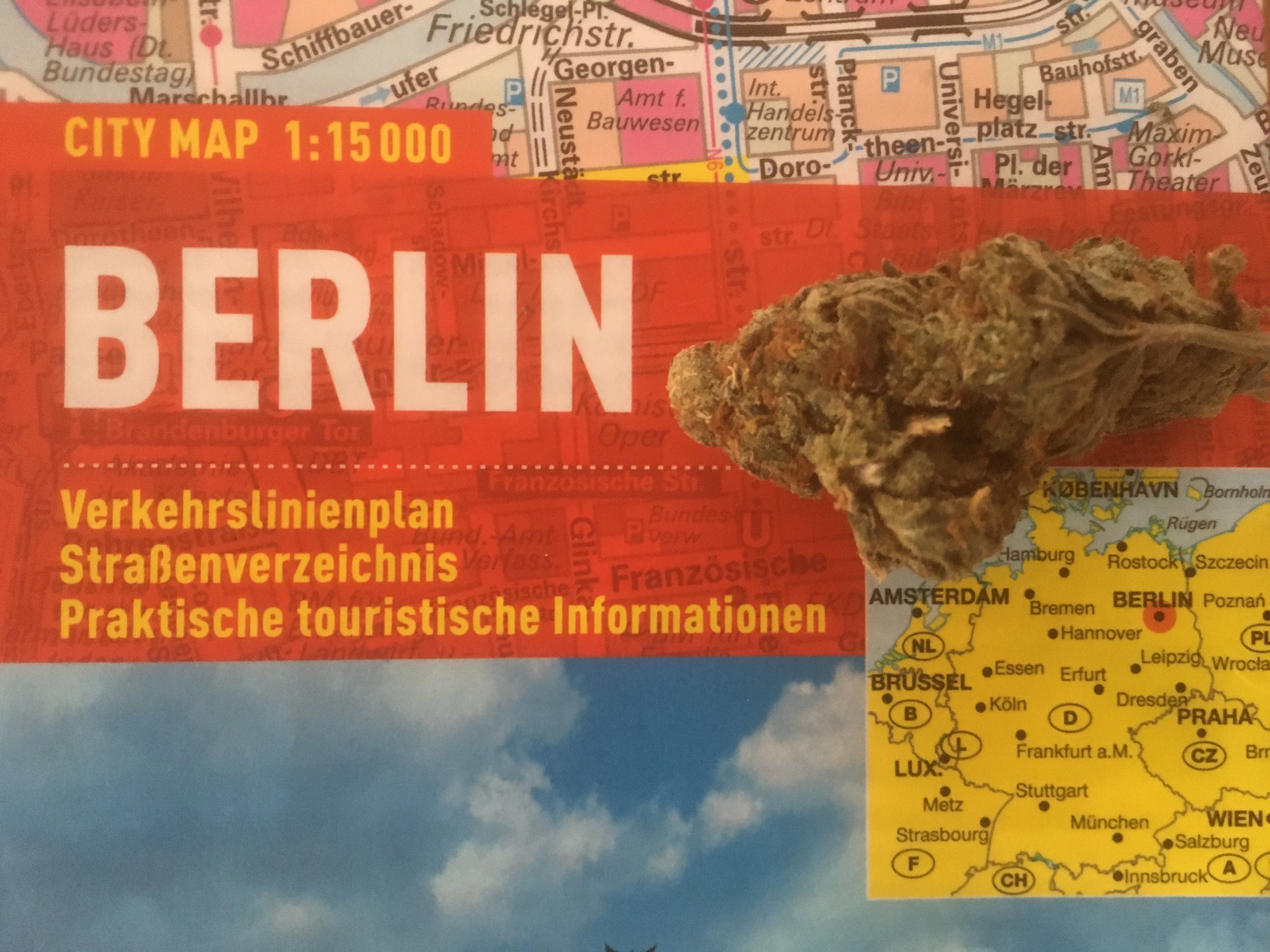
The German ‘traffic light’ coalition of the SPD, Greens, and Liberals promised in their 2021 post-election governing manifesto to not just decriminalise cannabis — but to be the first country in Europe legalise it.
Nearly 18 months later, and with a battle with Brussels looming over the move, not to mention the likely knock-on effects of Europe’s largest (by population) and richest nation effectively making marijuana another lifestyle choice, like alcohol, how is that going?
EUobserver spoke to Georg Wurth, the head of the German Hemp Association [Deutsche Hanfverband] in Berlin, to assess the likely pitfalls and potential.
The German Cannabis Association was set up in 2002 to lobby for cannabis legalisation, and comprises individual supporters, cannabis groups, and industry groups.
EUobs: Let’s get straight to the point — what is the latest state of play with the cannabis legislation, both within the governing coalition, and in the Bundestag?
Georg Wurth: Especially this week, since you ask me now, it is complicated. Because there is much speculation in the media, and among stakeholders, that the government is talking about ‘new approaches’.
They’re [the government] realising that there might be obstacles against it — like the European Union. And also our second chamber of parliament, the Bundesrat [upper house], where the German regions [Lander] come together. There, it’s a bit like in the USA (where some states are for and some are against).
![Rima Hassan in her Brussels office: '[It's] not merely a lack of courage; it is a criminal policy to advocate for a two-state solution today'](https://static.euobserver.com/2026/07/DSC_0345-2-2400x1602.jpg)


![As birthrates decline and the workforce empties out, “in some countries, [people] are obliged to retire,”](https://static.euobserver.com/2005/04/677e4ac7c530bd9e00eb0ac007326e19.jpg)
 Matt Tempest