
Production: By Europod, in co-production with Sphera Network.
EUobserver is proud to have an editorial partnership with Europod to co-publish the podcast series “Briefed” hosted by Léa Marchal. The podcast is available on all major platforms.
Find the full transcript below:
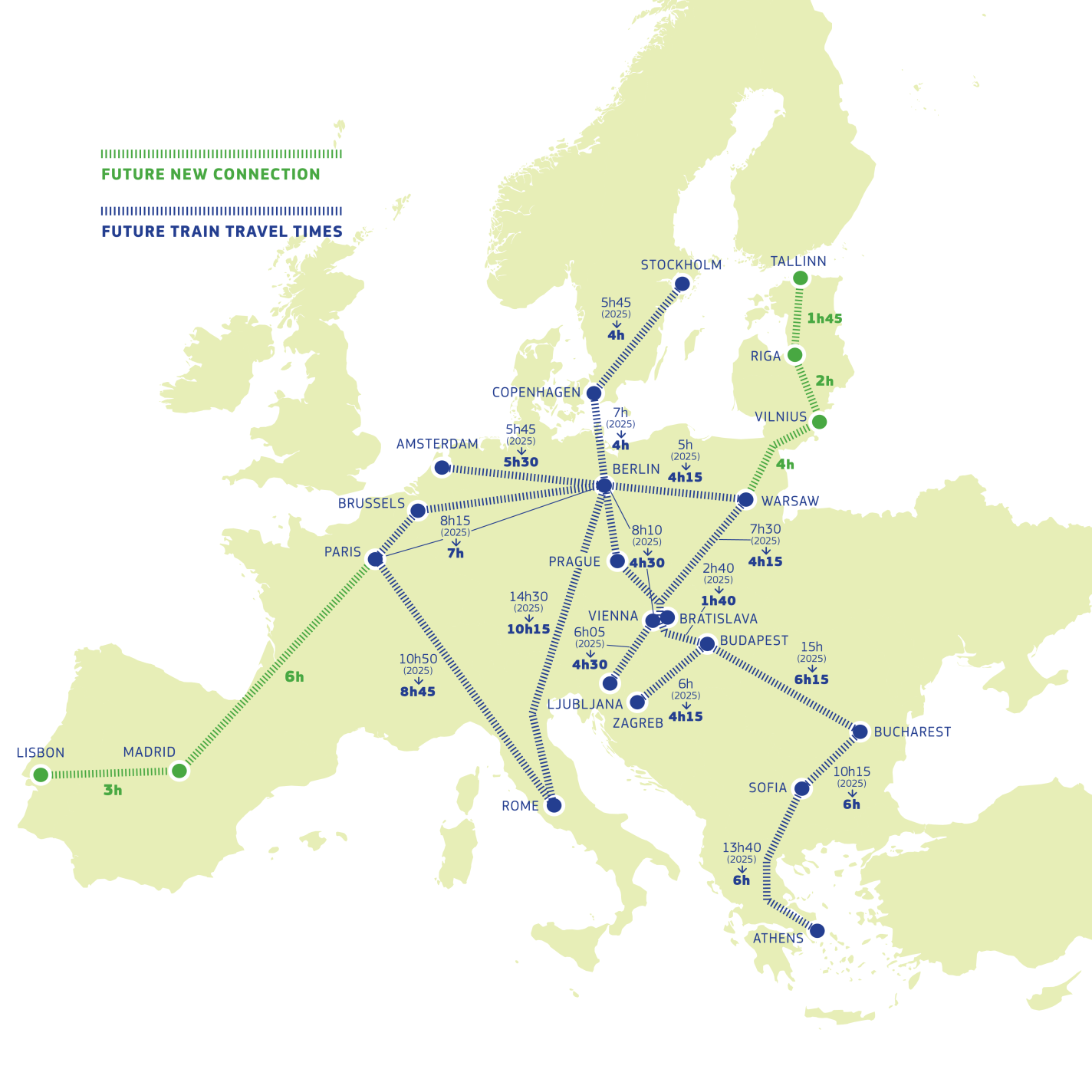
In 2024, Enrico Letta made this observation: it is incredibly difficult to link European capitals by train.
The former Italian prime minister was tasked with writing a report about the EU single market.
Two years on, what is being put in place? Last week, the European Commission made proposals for easier cross-border transport with its passenger package.
What is it, and can it really improve cross-border mobility?
“One journey, one ticket, full rights.” That’s how the European Commission sums up the passenger package.
The main idea: passengers should be able to buy seamless cross-border rail journeys through a single booking system. That includes trips involving multiple operators.
So let’s say you use the Belgian SNCB app: you should be able to book a whole journey from Brussels to Budapest in one go, even if it includes different companies.
The package also reinforces passenger rights, so that people booking journeys operated by different companies have access to reimbursements when delays and missed connections happen.
This comes after recent research conducted by the NGO Transport & Environment found that more than 60 percent of long-distance rail users avoided train journeys because booking cross-border tickets was simply too much hassle.
Will the new system be a game-changer when it comes to intra-EU mobility?
The new booking system, once adopted, should make life easier for travellers, especially those who are hesitant to move abroad or those who are afraid of travelling alone due to logistical difficulties.
That being said, this will not resolve everything.
First, because seamless rail mobility is not accessible everywhere.
On a map produced by the EU-funded programme ESPON, I noticed that in some European regions, borders have many road crossing points, but very few rail crossing points. Between Portugal and Spain, for instance, there are only four train lines that cross the border, while there are more than a dozen road crossing points.
In the ESPON report called “Governance mechanisms for cross-border functional areas ”, the authors show that infrastructure is an important factor affecting mobility in Europe. But it’s not the biggest one.
Some regions with relatively poor infrastructure still see high cross-border mobility. This is the case between Portugal and Spain, or between Bulgaria and its neighbouring countries, for example.
Why?
Because economic incentives matter even more.
Differences in wages, labour shortages, housing markets, and legal arrangements often drive people across borders, regardless of infrastructure quality.
One of the major border regions with significant flows is the one between Luxembourg and its neighbours: hundreds of thousands commute daily because labour market pull factors are simply too strong.
On the other hand, some regions still face regulatory frictions, governance mismatches, and weak long-term coordination. In other words, there are absolutely no incentives to work or access certain services across the border.
The European Commission’s proposals aim to tackle these issues.
But what I also found interesting is that the authors of the ESPON Cross-Governance report argue that EU regulatory or funding solutions will not solve everything.
Border regions need long-term joint strategies and governance structures that survive political cycles and even crises.